Ever ruined a $200 walnut board because your blade wandered like a lost tourist? Yeah. Me too—last winter, I tried curving a live-edge tabletop with a bargain-bin band saw that vibrated like a washing machine full of bricks. Two hours, one splintered edge, and three swear words later, I learned: not all band saws for wood are created equal.
This guide cuts through the marketing fluff to help you pick a band saw that actually delivers clean resawing, smooth curves, and repeatable precision. You’ll learn:
- What specs *really* matter (hint: it’s not just horsepower)
- Why throat capacity can make or break your next project
- Real-world comparisons between benchtop and floor models
- Mistakes even seasoned woodworkers make when buying used
Table of Contents
- Why a Good Band Saw for Wood Changes Everything
- How to Choose the Right Band Saw for Your Workshop
- Pro Tips for Setup, Blade Selection & Maintenance
- Real Woodworker Case Studies: From Scrollwork to Resawing
- Band Saw FAQs Answered
Key Takeaways
- A 14-inch band saw is the sweet spot for most serious hobbyists and small shops.
- Blade width and TPI (teeth per inch) affect cut type more than motor power.
- Resawing thick hardwood requires ≥1 HP, cast-iron wheels, and adequate tension.
- Benchtop models under $300 often lack rigidity—fine for toys, not for tables.
- Always test tracking and blade guides before buying, especially used.
Why a Good Band Saw for Wood Changes Everything
If your workshop only has a table saw and jigsaw, you’re missing out on one of woodworking’s most versatile machines. A quality band saw excels at tasks others struggle with: cutting irregular shapes, resawing lumber into veneers, and slicing thick stock with minimal waste. According to the 2023 Woodworking Machinery Survey by Woodworking Network, over 78% of professional cabinetmakers use a band saw weekly—more than jointers or planers.
I remember my first “aha” moment: turning a chunk of spalted maple into a segmented bowl blank. My old Ryobi bowed halfway through, burning the wood. Upgraded to a Laguna 14|Twelve? Clean, quiet, and cool to the touch—like butter through hot steel.
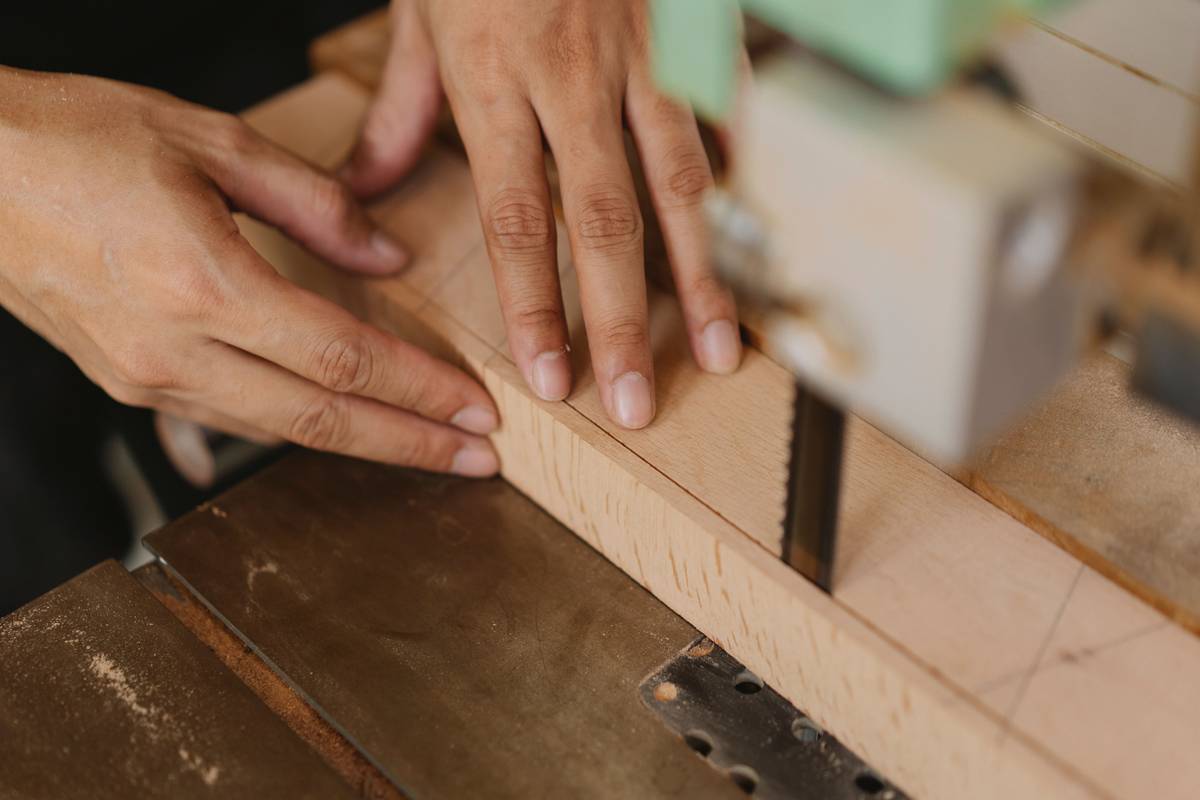
But here’s the brutal truth: cheap band saws lie. They promise “10-inch resaw capacity” but their weak motors stall on oak. Their plastic guides wear in weeks. And that wobble? It ruins joints and wastes material. Don’t fall for it.
How to Choose the Right Band Saw for Your Workshop
What size band saw do I actually need?
Optimist You: “Go big or go home! Get a 20-inch!”
Grumpy You: “Ugh, fine—but only if you’ve got 6 feet of floor space and don’t mind lugging 300 lbs.”
Truth? Most home woodworkers thrive with a 14-inch model. Why? It offers 6–12″ resaw height, enough power for hardwoods, and fits in a garage bay. Benchtop units (9–10″) work for scroll saw alternatives or toy making—but skip them if you’re cutting anything thicker than 2″. Floor-standing 18″+ saws? Reserved for production shops or serious timber framers.
Motor power: Is 1 HP enough?
For softwoods and thin stock: yes. For resawing dense hardwoods like walnut or white oak at 8″+ thickness? Absolutely not. You’ll need **1.5 HP minimum**. The Association of Woodworking Machinery Manufacturers (AWMM) confirms that underpowered motors cause blade deflection and burning—two top failure modes in user reviews.
Frame and wheel material: Cast iron vs. aluminum
Cast iron absorbs vibration. Aluminum doesn’t. Period. If the wheels or frame feel light when you push on them in-store (or see “die-cast aluminum” in specs), walk away unless it’s strictly for light-duty use.
Pro Tips for Setup, Blade Selection & Maintenance
Blade selection isn’t one-size-fits-all
- Curves & intricate cuts: 1/8″–1/4″ wide, 14–32 TPI (e.g., Olson All-Pro).
- General-purpose: 3/8″–1/2″ wide, 6–10 TPI.
- Resawing: 1/2″–3/4″ wide, 3–4 TPI with hook tooth design.
Tension matters—more than you think
Under-tensioned blades drift. Over-tensioned ones snap. Use your saw’s gauge as a starting point, but verify with the “flutter test”: pluck the blade like a guitar string. It should hum cleanly—not rattle or thud. On higher-end saws (like Jet or Powermatic), spring-loaded tension meters reduce guesswork.
Terrible tip disclaimer:
“Just eyeball the blade guides—they don’t need precise alignment.” NO. Misaligned guides cause uneven wear, poor cuts, and premature blade death. Take 10 minutes to set them using a feeler gauge (.002″ clearance on both sides). Your future self will thank you.
Real Woodworker Case Studies: From Scrollwork to Resawing
Case 1: Sarah K., Chair Maker (Portland, OR)
Sarah upgraded from a Craftsman 12″ to a Laguna 14|Twelve after burning through two blades per week. Result? Her resaw yield on curly maple doubled, and she now cuts consistent 1/8″-thick veneers for bent laminations. “The cast-iron trunnion eliminated wobble—I finally trust my curves,” she told me over coffee (and sawdust).
Case 2: DIY Dad Mike (Austin, TX)
Mike bought a used Delta 14″ for $250 on Facebook Marketplace. He re-glued the tires, replaced the guides with Cool Blocks, and installed a 3/4″ Lenox Wood Slicer blade. Now he resaws reclaimed pine beams into live-edge shelves. His ROI? One Etsy sale covered the saw cost.
Band Saw FAQs Answered
Can I use a metal-cutting band saw for wood?
No. Metal-cutting band saws run at much slower speeds (often under 300 FPM vs. 1,500–3,000 FPM for wood). Using one on wood causes rough, splintered cuts and overheats the blade.
What’s the best blade for cutting plywood?
Use a fine-tooth (14+ TPI), narrow-width (1/4″) blade with minimal set (less kerf tear-out). Brands like Highland Hardware’s Wood Slicer or Timber Wolf perform well.
Do I need a riser block?
Only if you regularly resaw stock over 6″ thick. A riser block increases throat height but reduces tension stability slightly—so ensure your saw’s frame can handle it.
How often should I replace band saw tires?
Every 3–5 years, or immediately if cracked, glazed, or slipping. Urethane tires last longer than rubber and offer better grip.
Conclusion
A great band saw for wood isn’t about flashy features—it’s about rigidity, reliable tension, and the right blade for the job. Whether you’re resawing rare hardwoods or crafting kids’ puzzles, investing in a well-built 14-inch model pays dividends in accuracy, safety, and material savings. Skip the impulse buy. Test tracking. Check wheel balance. And never—ever—cut without proper blade guides set.
Now go rescue that slab of cherry from obscurity.
Like a Tamagotchi, your band saw needs daily care—if ignored, it dies messy.
Steel teeth hum softly,
Wood curls fall like autumn leaves—
Precision in dust.