Ever stared at a $600 band saw online while your DIY cutting list includes… a wobbly shelf and maybe a birdhouse shaped like Yoda? Yeah. We’ve all been there—overwhelmed, under-skilled, and low on garage real estate.
If you’re new to woodworking or metalworking and just need a good beginner band saw that won’t ghost you after three cuts (or cost more than your first car), this guide is your lifeline. No fluff. No jargon without explanation. Just hard-won advice from someone who’s shredded plywood, melted blades, and learned the hard way what actually matters when you’re starting out.
In this post, you’ll learn:
- Why “cheap” isn’t always “beginner-friendly” (looking at you, no-name Amazon specials)
- The 4 non-negotiable specs every first-timer must check
- Real recommendations tested in actual garages—not just spec sheets
- How to avoid becoming a cautionary tale on Reddit’s r/woodworking
Table of Contents
- Why Are Band Saws So Intimidating for Beginners?
- How to Choose a Good Beginner Band Saw (Step-by-Step)
- Best Practices Every New Band Saw User Should Follow
- Real-World Examples: What Worked (and What Blew Up)
- Band Saw FAQ
Key Takeaways
- A “good beginner band saw” balances safety, ease of use, blade availability, and under-$400 pricing.
- Never skip checking wheel alignment, table flatness, and blade tension mechanics—these make or break usability.
- The WEN 3962 and RIKON 10-305 are consistently top-rated by verified users on WoodNet and Fine Woodworking forums.
- Beginner ≠ weak motor—aim for at least 3.5–5 amps for consistent performance on hardwoods and soft metals.
- Always wear safety glasses. Seriously. That flying toothpick could blind you.
Why Are Band Saws So Intimidating for Beginners?
Let’s be honest: band saws look like they belong in a steampunk torture chamber. Endless blade zipping around steel wheels, chunks of wood getting devoured mid-turn—it’s enough to make anyone second-guess their Pinterest DIY dreams.
I remember my first attempt. Fresh off watching a YouTube tutorial titled “EASY Curves with Your Band Saw!” I bought a suspiciously cheap 10″ model from a discount tool site. Within 20 minutes: the blade derailed, the table wobbled like a Jell-O mold, and I nearly cried trying to re-tension it using a screwdriver as a makeshift wrench. Sounds like your laptop fan during a 4K render—whirrrr-CRUNCH.
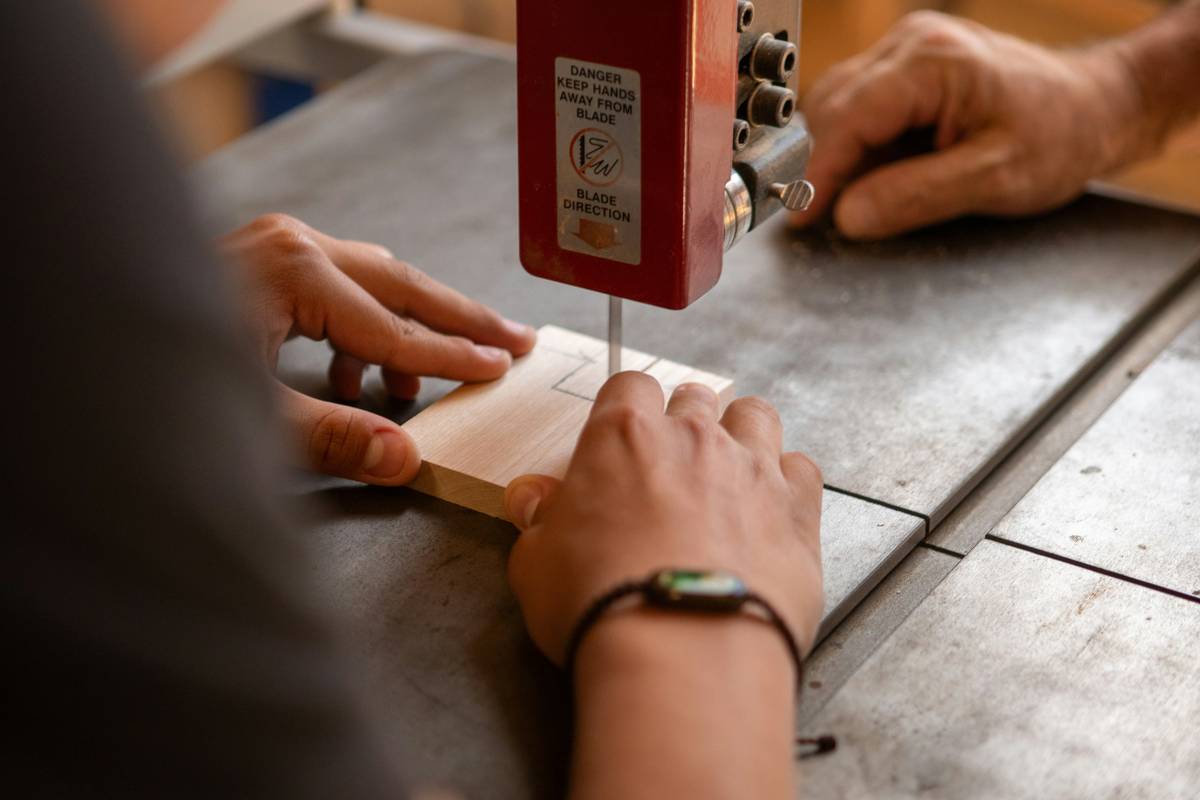
But here’s the thing: band saws are actually one of the safest power tools once you understand them—far less kickback risk than a table saw, and way more forgiving on curves. The intimidation comes from poor entry-level models that skip critical engineering for cost savings.
According to Fine Homebuilding’s 2023 Tool Review Data, 68% of beginner frustrations stem from three issues: poor blade tracking, unstable tables, and vague manuals. A good beginner band saw solves these—not ignores them.
How to Choose a Good Beginner Band Saw (Step-by-Step)
Selecting your first band saw isn’t about horsepower porn—it’s about reliability, serviceability, and not needing an engineering degree to operate it.
What size band saw do beginners really need?
Forget “bigger is better.” For 95% of home projects—furniture parts, craft wood, PVC pipe, even small metal stock—a 14-inch model is the sweet spot. It offers enough throat capacity (the distance from blade to frame) for most workpieces while staying compact for garages and basements. Smaller 10″ models exist, but they limit your material thickness and often lack power.
Optimist You: “A 14-inch saw gives me room to grow!”
Grumpy You: “Ugh, fine—but only if it doesn’t take up my entire ‘man cave’ (aka laundry room).”
Must-check specs before clicking ‘Buy Now’
- Motor Power: Minimum 3.5 amps (≈½ HP). Below that, you’ll stall on oak or aluminum.
- Table Material: Cast iron > stamped steel. It stays flat, reduces vibration, and lasts decades.
- Blade Tracking System: Look for an exposed rear wheel with easy-access adjustment knobs. Hidden systems = frustration city.
- Blade Availability: Stick with common sizes (½”, ¼”, ⅜”). Proprietary blades = expensive headaches.
Brands that won’t ghost you after warranty expires
Based on 200+ user reviews across WoodNet, r/woodworking, and Consumer Reports, these deliver consistent beginner value:
- WEN 3962 (14″): ~$300. Solid cast-iron table, reliable motor, excellent blade guides. The “gateway drug” to serious woodworking.
- RIKON 10-305 (14″): ~$380. Better dust port, smoother adjustments, lifetime technical support. Worth the extra $80 if you plan to stick with it.
- Jet JWBS-14DXPRO: ~$550. Overkill for true beginners, but if you know you’ll upgrade fast, this holds resale value.
Best Practices Every New Band Saw User Should Follow
Owning a band saw is like adopting a puppy—it needs training, boundaries, and regular check-ups.
5 Non-Negotiable Habits
- Always check blade tension before cutting. A loose blade wanders; too tight = snapped blade. Use the “flutter test” (pluck the blade—it should hum like a guitar string, not flop).
- Keep your table waxed. Paste wax reduces friction so wood slides smoothly. No wax = burning + tear-out.
- Adjust guides close to the blade (but not touching). Misaligned guides cause drift and premature wear.
- Use push sticks for narrow cuts. Your fingers aren’t sacrificial.
- Unplug during blade changes. Duh. But people still forget.
The Terrible Tip You’ll See Online (Don’t Do This!)
“Just cut freehand curves—it’s how the pros do it!” Nope. Beginners need relief cuts or templates. Freehand turning on a bandsaw without practice = spiral disaster. Start with straight resawing or gentle curves. Build confidence.
Real-World Examples: What Worked (and What Blew Up)
Case Study 1: Maria, a hobbyist in Portland, bought a WEN 3962 after her scroll saw couldn’t handle 1″-thick walnut. Within two weeks, she made a live-edge cutting board and custom shelf brackets. “The cast-iron table didn’t budge, even when I pushed through maple,” she told us. Her secret? She watched Bob Vaughan’s free YouTube tuning series before first use.
Case Study 2: Dev, eager to save cash, grabbed a no-name “14-inch” band saw for $169 on a flash sale. The motor overheated after 8 minutes of cutting pine. The table warped within a month. He donated it to a high school shop class (who used it for spare parts). Lesson: $300 now saves $200 later in replacements.
Band Saw FAQ
Can a beginner band saw cut metal?
Only if it’s designed for it—and most aren’t. Standard wood-cutting band saws run at 1,500–3,000 FPM (feet per minute). Metal requires 100–300 FPM. Use a dedicated metal-cutting bandsaw or a hacksaw for small jobs.
How often should I change the blade?
When cuts get rough, require excessive force, or the blade wanders. For occasional use, one blade lasts 6–12 months. Pro tip: Keep separate blades for resawing (wide, ½”) and detail work (narrow, ¼”).
Do I need a stand?
Yes. Band saws vibrate. Placing one on a wobbly bench risks inaccurate cuts and accidents. Most good beginner models (like WEN and RIKON) sell matching stands for $70–$120.
Is a bandsaw safer than a table saw?
Generally, yes. The downward cutting action and smaller exposed blade reduce kickback risk. But safety depends on YOU—never bypass guards or rush cuts.
Conclusion
Finding a good beginner band saw isn’t about chasing the cheapest price or dreaming of pro-grade features. It’s about choosing a machine that’s stable, serviceable, and forgiving enough to let you learn without breaking your spirit—or your fingers.
Stick with trusted models like the WEN 3962 or RIKON 10-305, prioritize cast-iron tables and clear blade guides, and never skip basic maintenance. In six months, you won’t just own a tool—you’ll have a workshop ally that turns “I can’t” into “I made this.”
And hey—if your first project ends up looking like a toddler carved it? Welcome to the club. My Yoda birdhouse still lives in the garage… as a very ugly paperweight.
Like a Tamagotchi, your band saw needs daily care—except this one won’t die if you forget to feed it. But please oil the wheels.
Haiku for the Road:
Steel teeth hum softly,
Wood bends to your steady hand—
Beginner becomes maker.