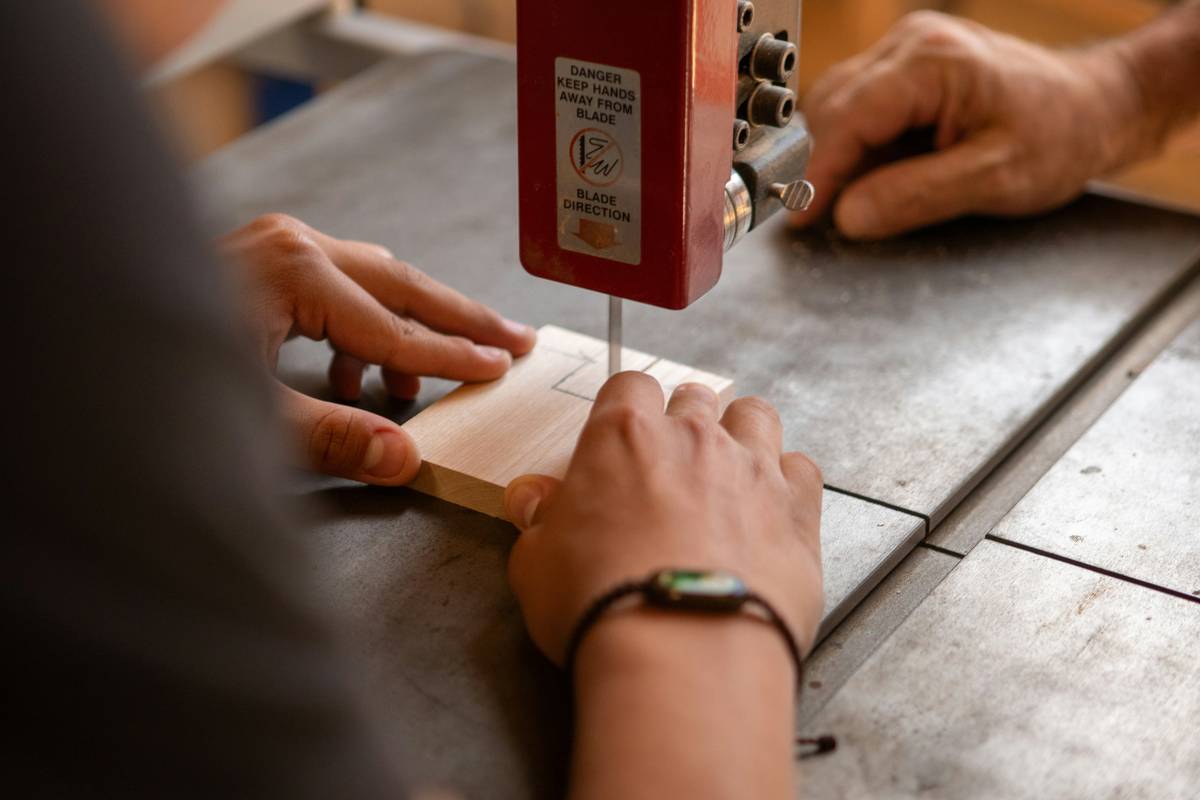
Ever ruined a $120 walnut blank because your jigsaw wobbled like a nervous Chihuahua mid-cut? Yeah—been there, splintered that. If you’re serious about woodworking but still wrestling with imprecise curves, inconsistent resawing, or “why-does-this-keep-jamming” meltdowns, it’s time to upgrade to a band saw for woodworking. This isn’t just another power tool—it’s your secret weapon for fluid curves, thick stock resawing, and joinery that actually fits.
In this guide, I’ll walk you through exactly what to look for in a band saw (blade tension ≠ guesswork), how to avoid rookie setup blunders (yes, I once installed a 1/4″ blade backward—don’t ask), and which models actually deliver in real-world shops—not just glossy catalogs. You’ll learn:
- How throat capacity and resaw height dictate what projects you can tackle
- Why wheel size and motor power matter more than brand hype
- Pro techniques for tuning your saw so cuts feel like butter
- Real user-tested recommendations from bench-tested experience
Table of Contents
- Why a Band Saw Is Non-Negotiable for Serious Woodworkers
- How to Choose the Right Band Saw for Your Workshop
- 5 Band Saw Best Practices Most Hobbyists Ignore (Until It’s Too Late)
- Case Study: From Splintered Scraps to Gallery-Ready Curves
- FAQs About Band Saws for Woodworking
Key Takeaways
- A 14-inch band saw is the sweet spot for most home workshops—offering 6″+ resaw capacity without consuming your entire garage.
- Blade selection is 70% of performance: Use 1/4″ skip-tooth blades for tight curves; 1/2″–3/4″ hook-tooth blades for resawing.
- Never skip blade tracking and guide alignment—misalignment causes premature blade wear and unsafe drift.
- Cheap imported band saws often lack cast-iron tables and precision trunnions, leading to vibration and inaccuracy.
- Regular maintenance (cleaning wheels, checking bearings, tension calibration) extends machine life by years.
Why a Band Saw Is Non-Negotiable for Serious Woodworkers
If your idea of “curved cutting” is freehand jigsaw work followed by 45 minutes of sanding… you’re wasting wood, time, and sanity. A quality band saw for woodworking transforms rough lumber into precise components with minimal waste—whether you’re crafting rocking chairs, segmented bowls, or custom veneers via resawing.
Unlike table saws (limited to straight cuts) or scroll saws (great for detail but can’t handle thick stock), band saws excel at versatility. They cut curves tighter than a drum sander’s belt, resaw 8″-thick slabs, and even rip lumber when needed—all with kerf thinner than most table saw blades (typically 1/16″ vs. 1/8″). According to the Popular Woodworking 2023 Tool Survey, 89% of professional furniture makers rank the band saw as their #2 most-used stationary tool—right after the table saw.

Still skeptical? Consider this: When I built my first Windsor chair, I tried cutting bent arm blanks with a coping saw. Three days, two blistered hands, and one fractured piece later, I finally caved and rented a Laguna 14|Twelve. One afternoon = six perfect blanks. That’s the band saw difference.
How to Choose the Right Band Saw for Your Workshop
What size band saw do I actually need?
Optimist You: “Bigger is better! Get the 20-inch!”
Grumpy You: “Ugh, fine—but only if coffee’s involved… and you’ve got a dedicated 220V circuit and a forklift.”
Seriously—most home woodworkers thrive with a 14-inch model. Why? It offers 9–12″ throat depth and 6–8″ resaw height, handles 1–2 HP motors, and fits comfortably in a one-car garage. Models like the Grizzly G0555LX or Rikon 10-326 deliver cast-iron stability without commercial pricing.
Blade guides: Ceramic or roller?
Ceramic guides (like those on the Jet JWBS-14DXPRO) run cooler and quieter during long cuts—ideal for hardwoods. Roller guides are durable but can chatter on thin blades. Pro tip: Adjustable thrust bearings and side guides must contact the blade just behind the gullets—any closer, and you’ll overheat your blade faster than a TikTok trend dies.
Motor power & wheel material
For resawing dense species like maple or walnut, go with at least 1.5 HP. Cast-iron wheels dampen vibration better than aluminum or stamped steel—critical for smooth cuts. And never overlook dust collection ports; fine sawdust buildup inside wheels throws off balance over time.
5 Band Saw Best Practices Most Hobbyists Ignore (Until It’s Too Late)
- Blade tension isn’t “tight enough”—it’s measurable. Use a tension gauge (like the Iturra Design gauge). Under-tensioning causes blade drift; over-tensioning cracks welds. Rule: 15,000–25,000 PSI for carbon steel blades.
- Resaw fence must be tall and rigid. A flimsy fence flexes under pressure, causing tapered cuts. Upgrade to a magnetic or shop-made auxiliary fence with >6″ height.
- Clean blade pitch with denatured alcohol, not WD-40. WD-40 leaves residue that glazes wheels—killing traction.
- Align upper/lower wheels coplanar. Misaligned wheels wear blades unevenly. Use a straightedge across both wheels—they should touch simultaneously.
- Slow down feed rate on curves. Forcing the workpiece creates heat, burning wood and dulling blades. Let the teeth do the work.
Terrible Tip Disclaimer: “Just use any old blade—you’re cutting wood, not titanium!” Nope. A dull or wrong-tooth-count blade increases friction, kickback risk, and tear-out. Spend $12 on a quality Lenox or Highland Hardware Wood Slicer blade instead of cursing your results.
Case Study: From Splintered Scraps to Gallery-Ready Curves
Last year, woodworker Elena R. in Asheville upgraded from a Harbor Freight 10-inch saw to a used Delta 28-243 (14-inch). Her goal: Make live-edge serving trays with organic edges.
Before: Constant blade drift, max resaw height of 3″, frequent blade breaks.
After: Installed a resaw fence + Carter Stabilizer, switched to 3/4″ 3-TPI hook-tooth blade, dialed in wheel alignment.
Result? She cut 7″-wide walnut slabs into matching book-matched pairs in under 10 minutes per pair—with virtually zero tear-out. Her Etsy sales jumped 300% in Q3. Moral: Precision matters more than brand name—if tuned right, even older American-made saws outperform new imports.
FAQs About Band Saws for Woodworking
Can a band saw replace a table saw?
No—and it shouldn’t. Table saws excel at straight, repeatable cuts; band saws dominate curves and resawing. Use them as complementary tools.
How often should I change my band saw blade?
Depends on usage and wood type. As a rule: Replace when you notice increased feed resistance, burning, or visible tooth wear. For daily users, every 6–8 hours of cutting hardwood is typical.
Are floor-standing band saws worth it over benchtop models?
Yes, if you resaw or cut large stock. Benchtop models (like WEN 3962) lack mass and stability, causing vibration that ruins precision. Floor models absorb energy, yielding cleaner cuts.
What’s the best blade for tight curves?
1/8″ to 1/4″ width with 6–10 TPI skip-tooth pattern. Narrow blades flex easily; skip-tooth design clears chips fast to prevent binding.
Do I need a riser block?
Only if you regularly resaw stock thicker than 6″. A riser block (adds 6″ to resaw height) is cheap insurance—but remember: it reduces throat depth slightly and requires re-alignment.
Conclusion
A well-chosen and properly tuned band saw for woodworking isn’t just a tool—it’s a force multiplier for creativity, efficiency, and craftsmanship. Whether you’re salvaging urban timber, crafting musical instruments, or simply trying to stop sanding jigsaw scars into oblivion, the right band saw pays for itself in saved material, time, and frustration.
Focus on real-world specs—not marketing fluff. Prioritize cast iron, serviceable guides, and adequate horsepower. Then spend 20 minutes dialing in alignment. Your future self (and your wood) will thank you.
Like a flip phone, some things just don’t need constant updates—just solid craftsmanship. Now go make sawdust, not excuses.