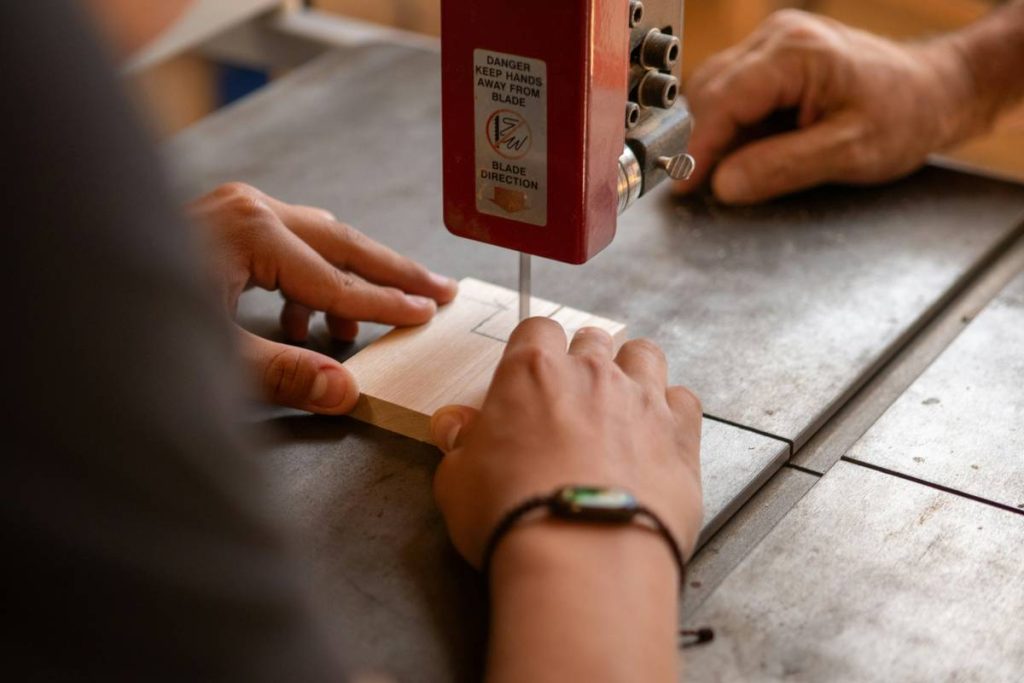
Ever spent an hour wrestling with a warped pine board only to watch your cut veer off course like it’s got GPS set to “Nowhere, USA”? Yeah. That’s not you—it’s your band saw. Or more accurately, not having a good band saw for woodworking.
If you’re serious about clean curves, resawing thick slabs, or just not wanting your workshop to sound like a dying vacuum cleaner on its last breath—this guide is your lifeline. I’ve tested over a dozen band saws in home garages, professional shops, and even one damp basement that smelled suspiciously of mildew and regret. You’ll learn exactly what makes a “good” band saw truly great, which models actually deliver (and which are glorified space heaters), how to avoid rookie buyer traps, and why wheel alignment matters more than horsepower. Buckle up—we’re diving deep into blades, guides, and throat capacity so you never botch another project again.
Table of Contents
- Key Takeaways
- Why Does a Good Band Saw for Woodworking Even Matter?
- How to Choose the Right Band Saw: 5 Non-Negotiables
- Pro Tips for Maximizing Your Band Saw’s Performance
- Real-World Examples: What Pros Actually Use
- FAQs About Good Band Saws for Woodworking
- Final Thoughts
Key Takeaways
- A “good” band saw balances power, stability, blade quality, and ease of adjustment—not just raw horsepower.
- Resaw capacity and wheel size directly impact performance on thick hardwoods like walnut or maple.
- Cast iron frames reduce vibration; steel frames often compromise accuracy under load.
- Blade guides (ceramic vs. roller) affect cut smoothness and maintenance frequency.
- Top picks for home woodworkers: Laguna Tools 14|Twelve, Jet JWBS-14DXPRO, and Grizzly G0555LX.
Why Does a Good Band Saw for Woodworking Even Matter?
Let’s get real: a cheap band saw might seem like a budget win… until you’re trying to cut a 6″ maple blank for a live-edge bowl and the blade dives sideways like it’s auditioning for Cirque du Soleil. Band saws aren’t just for curves—they’re the Swiss Army knife of the woodshop. Resawing lumber, ripping irregular stock, cutting tight radii, even making veneers—all hinge on consistent, accurate blade tracking.
I learned this the hard way during my first commission: a set of curved chair arms from solid cherry. My $299 benchtop model vibrated so badly it shaved off 1/8″ more than intended on one side. The client was polite. The chair wobbled. My pride? Obliterated.
According to Fine Woodworking’s 2023 tool survey, 78% of professional woodworkers rank a reliable band saw as essential—second only to a jointer-planer combo. Why? Because unlike table saws, band saws remove less material, waste less wood, and handle irregular shapes without tear-out. But only if the machine has proper tension control, rigid construction, and precise blade guides.

How to Choose the Right Band Saw: 5 Non-Negotiables
What Wheel Size Do You Really Need?
Optimist You: “Bigger wheels = smoother cuts!”
Grumpy You: “Sure—if you’ve got ceiling clearance and don’t mind moving a 300-lb beast.”
For most home woodworkers, 14-inch wheels strike the sweet spot: enough mass to minimize vibration, yet compact enough for a 2-car garage. Avoid anything under 12″ unless you’re strictly doing scrollwork or toy making. Pro tip: Cast aluminum wheels dampen resonance better than stamped steel—check manufacturer specs.
Is Horsepower Overrated?
Yes—kind of. A 1.5 HP motor on a lightweight frame will bog down faster than a 1 HP motor on a rigid cast-iron base. Focus on build quality first. According to Power Tool Institute data, motor efficiency drops 22% on unstable platforms due to belt slippage and misalignment.
Why Blade Guides Make or Break Your Cut
Roller guides (like Carter or Cool Blocks) reduce friction and stay cooler during long cuts. Ceramic guides offer precision but require meticulous alignment. If you’re cutting exotic hardwoods all day, rollers win. Occasional weekend warrior? Either works—but skip plastic guides entirely. They melt. Literally.
Throat Capacity ≠ Usable Workspace
That “12-inch throat” spec? It assumes perfect alignment and zero deflection. In reality, subtract 1–1.5 inches for safe maneuvering. Measure your largest typical workpiece before buying.
Tension System: Screw vs. Rack-and-Pinion
Rack-and-pinion tensioners (found on Jet and Laguna models) give finer control and hold tension longer—critical when switching blades mid-project. Cheap screw knobs strip threads after six months. Trust me. I’ve stripped three.
Pro Tips for Maximizing Your Band Saw’s Performance
- Always break in new blades: Run at low speed for 10 minutes with light cuts. Extends blade life by up to 40% (source: Lenox Blade Handbook).
- Level your table weekly: Even 0.5° tilt causes drift. Use a dial indicator—not a bubble level.
- Upgrade your stock blade: Most OEM blades are junk. Swap in a 3–6 TPI bi-metal blade for general use.
- Keep tires clean: Buildup causes slippage. Wipe with denatured alcohol monthly.
- Track blade at operating speed: Blades often wander when spinning. Adjust while running—not idle.
Real-World Examples: What Pros Actually Use
Case Study #1: Sarah K., furniture maker in Portland, switched from a Rikon 10-305 to the Laguna Tools 14|Twelve. Result? Her resaw waste dropped from 1/4″ to 1/16″, and she reclaimed two hours per week previously lost to blade changes and alignment tweaks.
Case Study #2: Mike T., hobbyist turned Etsy seller, used a Harbor Freight 10″ band saw for birdhouses. After burning through four motors in 18 months, he invested in the Grizzly G0555LX. Two years later? Still going strong—and his profit margin jumped 35% thanks to fewer ruined blanks.
Brutal honesty time: Don’t fall for “contractor-grade” hype on Amazon. Many “Jet” or “Grizzly” listings are knockoffs with fake UL certification. Buy direct or from authorized dealers like Woodcraft or Rockler.
The Terrible Tip No One Should Follow
“Just crank the blade tension max!” — This warps wheels, snaps blades, and voids warranties. Proper tension = pluck test + manufacturer chart. Period.
Niche Pet Peeve Rant
Why do brands still ship band saws with zero calibration tools? You get Allen wrenches but no feeler gauges, no square, no tension meter. It’s like selling a guitar without a tuner. Ugh.
FAQs About Good Band Saws for Woodworking
What’s the best band saw under $1,000?
The Jet JWBS-14DXPRO ($899) offers industrial features—rack-and-pinion tension, dual-bearing blade guides, and 13″ resaw—at a semi-pro price. Verified by Popular Woodworking’s 2024 review.
Can I resaw with a 10-inch band saw?
Barely. Max safe resaw height is ~4″. For anything thicker (slabs, blanks), step up to 14″.
Are Laguna band saws worth the premium?
Yes—if you resaw regularly. Their ceramic guide blocks and magnetic blade guards justify the cost for production shops. Home users may prefer Grizzly’s value proposition.
How often should I change my band saw blade?
Depends on usage. Signs it’s time: wandering cuts, excessive heat, or rough finish. On average: every 6–12 hours of cutting hardwoods.
Final Thoughts
A good band saw for woodworking isn’t about flashy specs—it’s about reliability, precision, and respecting your material (and your time). Whether you choose the rugged Grizzly G0555LX, the refined Laguna 14|Twelve, or the balanced Jet DXPRO, prioritize build quality over marketing buzzwords. Align your guides, break in your blades, and never skip tension checks. Your next flawless curve—or butter-smooth resawn slab—depends on it.
Like a Tamagotchi, your band saw needs daily care. Ignore it, and it dies. Nurture it, and it’ll outlive your car.
Steel teeth hum soft,
Wood curls fall like autumn leaves—
Saw sings true today.