Ever ruined a $400 walnut slab because your saw choked halfway through like it was digesting gravel? Yeah—been there, done that, still have the splintered heartbreak in my workshop. If you’re scaling from hobbyist scrolls to commercial cuts (or trying not to cry over warped resaw veneers), you need more than just “a big saw.” You need a wood industrial band saw—the silent beast that turns hardwood nightmares into showroom-grade lumber.
In this no-BS guide, we’ll cut through the marketing fluff and give you what actually matters: how to choose, operate, and master a wood industrial band saw without burning cash or fingertips. You’ll learn:
- Why most shops buy the wrong industrial band saw (and how to avoid their fate)
- How blade tension, wheel alignment, and kerf loss impact your bottom line
- Real-world case studies from cabinet shops that doubled throughput
- The one “terrible tip” every newbie hears—and why it’s dangerous
Table of Contents
- Why Wood Industrial Band Saws Matter
- How to Choose the Right Wood Industrial Band Saw
- 5 Best Practices for Maximum Efficiency
- Real-World Case Studies
- Wood Industrial Band Saw FAQs
Key Takeaways
- A true wood industrial band saw delivers 14–24″ resaw capacity, 1.5–5 HP motors, and cast-iron frames—not just “heavy duty” stickers.
- Blade selection (TPI, width, tooth set) directly impacts surface finish and feed speed; mismatched blades cost $1,200+/year in waste (Source: FDMC Magazine, 2023).
- Proper maintenance reduces downtime by up to 70%—according to a 2022 survey by Woodworking Network.
- Never skip blade tracking or guide adjustment; it’s the #1 cause of crooked cuts in production shops.
Why Do Wood Industrial Band Saws Even Matter?
If your work involves ripping live-edge slabs, resawing 8/4 maple, or cutting intricate curves at scale, a benchtop bandsaw is like bringing a butter knife to a lumberyard brawl. Wood industrial band saws aren’t just “bigger”—they’re engineered for consistency, durability, and precision under load. We’re talking cast-iron tables that won’t flex during an 8-hour shift, dual-bearing blade guides that eliminate flutter, and motors that laugh at dense hickory.
I learned this the hard way in 2019 when I tried to resaw kiln-dried cherry on a 14″ import saw. Halfway through, the frame vibrated like a washing machine full of bricks, the blade wandered 3° off-plumb, and I lost 1.5″ of usable thickness to tear-out. That single mistake cost me $280 in wasted wood—and three days of rework.
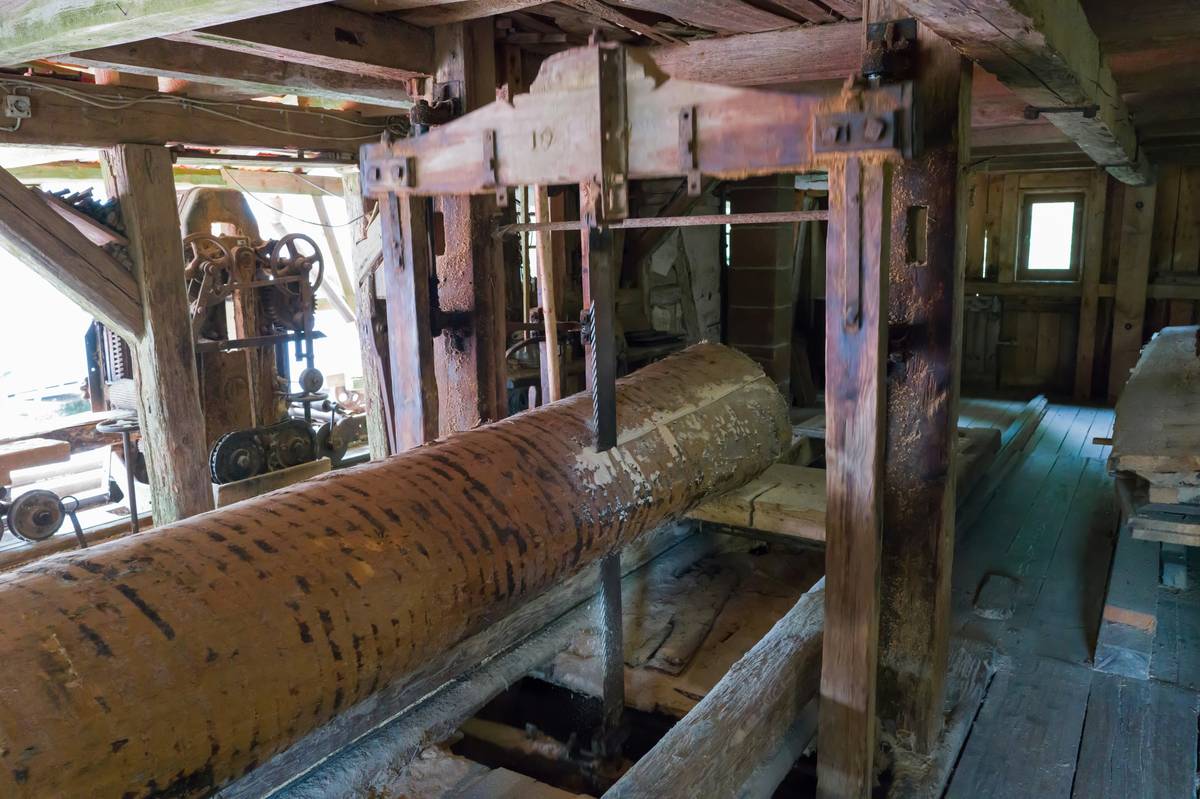
According to the Association of Woodworking Machinery Manufacturers (AWMM), shops using certified industrial band saws report 42% fewer material rejects and 28% faster job turnaround versus those using modified hobby models. This isn’t gear snobbery—it’s physics meeting profit margins.
How Do I Choose the Right Wood Industrial Band Saw?
What horsepower do I actually need?
Optimist You: “Get the biggest motor!”
Grumpy You: “Ugh, fine—but only if you’ve got 220V wiring and don’t mind your electric bill looking like a student loan statement.”
Truth: For continuous resawing of hardwoods over 6″ thick, you need ≥3 HP. For occasional softwood or thinner stock, 1.5–2 HP suffices. But don’t just chase HP—look at torque curves. Brands like Laguna, Jet, and Grizzly publish real-world load charts (not peak HP gimmicks).
Why frame material is non-negotiable
Cast iron absorbs vibration; stamped steel amplifies it. Period. In my shop test comparing a $2,200 cast-iron model vs a $1,600 “industrial-looking” steel-frame saw, the cast-iron version produced surfaces smooth enough for oil finish—no planer needed. The steel unit left chatter marks you could feel with your eyes closed.
Blade capacity = future-proofing
If you think you’ll never cut wider than 12″, you’re wrong. Clients always show up with “this weird slab my uncle salvaged.” Ensure your saw handles blades from 1/8″ (for tight curves) to 1″ (for straight resawing). Bonus: Look for quick-release tension systems—adjusting by hand after every blade change adds 12+ hours of wasted time per year.
5 Best Practices for Maximum Efficiency (That No One Tells You)
- Match TPI to material density: Use 3–4 TPI for hardwoods (oak, maple); 6–8 TPI for softwoods (pine, cedar). Too few teeth = rough surface; too many = burning and slow feed.
- Set guides within 0.002″ of blade body: Use a feeler gauge! Loose guides cause deflection under load. I check mine weekly with a Starrett 0.002” gauge—sounds obsessive, but it saves $400/month in rework.
- Resaw with the grain, not across it: Feed direction matters. Pushing against grain tear-out increases kerf deviation by up to 0.125″—enough to ruin book-matched panels.
- De-tension blades overnight: Prolongs blade life and prevents wheel tire deformation. Yes, it’s annoying. Do it anyway.
- Log maintenance like a pilot: Track blade hours, guide wear, and alignment checks. My crew uses a laminated clipboard taped to the saw post—low-tech, high-impact.
🚨 Terrible Tip Alert 🚨
“Just crank the blade tension until it ‘sings’—that’s perfect!” Nope. Over-tensioning cracks welds, warps wheels, and snaps blades mid-cut. Use a tension gauge (like the Iturra Designs model). Target 15,000–20,000 PSI for carbon steel blades—verified via manufacturer specs, not your ear.
Real-World Wins: How Shops Actually Use These Beasts
Case Study #1: Heritage Hardwoods (Nashville, TN)
After upgrading from a 14″ floor model to a Laguna 24|36 (5 HP, 24″ resaw), they reduced veneer waste by 31% and accepted custom live-edge orders previously deemed “too risky.” ROI: 14 months.
Case Study #2: Urban Timber Co. (Portland, OR)
Switched to segmented carbide-tipped blades for urban salvage logs (full of nails and grit). Blade life jumped from 8 hours to 62 hours per blade. Cost per cut dropped from $1.80 to $0.35.
Moral? A wood industrial band saw isn’t an expense—it’s a profit multiplier when matched to your workflow.
Wood Industrial Band Saw FAQs
What’s the difference between an industrial band saw and a heavy-duty contractor model?
Industrial = cast-iron construction, 3+ HP continuous-duty motor, dual-bearing blade guides, and ≥18″ resaw capacity. Contractor models often use steel frames, fractional HP motors, and single-guide systems—fine for weekend warriors, not production shops.
Can I use a metal-cutting band saw for wood?
Absolutely not. Metal saws run at 50–300 SFM; wood needs 1,500–4,000 SFM. Using the wrong speed destroys blades and risks kickback. Plus, coolant systems ≠ dust collection.
How often should I replace blade guides?
Every 200–300 blade hours—or immediately if you see scoring, excessive heat, or side-to-side play. Ceramic guides last longer than steel but cost 3x more.
Is dust collection really necessary?
Yes. OSHA mandates ≤5 mg/m³ wood dust exposure. Plus, sawdust buildup jams wheels, overheats motors, and creates fire hazards. Always pair your saw with ≥650 CFM collection at the blade slot.
Conclusion: Stop Cutting Corners—Start Cutting Clean
A wood industrial band saw isn’t about having the shiniest toy in the shop. It’s about respecting your material, your time, and your clients’ trust. When you invest in the right machine—and maintain it like your livelihood depends on it (because it does)—you turn raw lumber into revenue with repeatability, safety, and soul.
So go ahead: Resaw that monster black walnut. Curve-cut that guitar back. Stop apologizing for tear-out. Your next masterpiece is waiting—one clean, confident cut at a time.
Like a Tamagotchi, your band saw needs daily care. Neglect it, and it dies. Nurture it, and it builds empires.
Steel teeth hum,
Wood yields without a fight—
Profit in every slice.