Ever stood in your garage, blade jammed mid-cut on cheap particle board, sweat dripping into your safety goggles while you curse the “budget” band saw that cost more in frustration than cash? Yeah. Been there—twice. And both times, I skipped straight past proper research and landed on a tool that sounded like a dying lawnmower doing interpretive dance.
If you’re eyeing a Sydney Tools band saw, you’re not just shopping for metal and motors—you’re investing in precision, durability, and sanity. This post cuts through the fluff (pun intended) so you can pick, use, and maintain your band saw like someone who’s actually split oak planks at 6 a.m. with coffee breath and zero regrets.
You’ll learn: how Sydney Tools’ band saws stack up against generic imports, real-world performance quirks from hands-on testing, critical setup mistakes even seasoned woodworkers make, and why “cheap” often means “expensive in tears.” Plus—how to avoid turning your workshop into a noise complaint zone.
Table of Contents
- Key Takeaways
- Why Does a Band Saw Even Matter in Home Workshops?
- How to Choose the Right Sydney Tools Band Saw for Your Projects
- 5 Pro Tips to Get Flawless Cuts (Without Sacrificing Fingers)
- Real Workshop Case Study: From Wobbly Cut to Gallery-Quality Curve
- Sydney Tools Band Saw FAQs
- Final Thoughts
Key Takeaways
- Sydney Tools band saws (like the ST-14BS) offer industrial-grade components at DIY-friendly prices—rare in today’s import-saturated market.
- Blade tension and tracking aren’t “set-and-forget”—they demand weekly checks if you cut more than once a month.
- Never skip resaw capacity verification; many users assume 14″ = full 14″ depth, but usable height is often 10–12″.
- Using the wrong blade TPI (teeth per inch) for material thickness is the #1 cause of burning and blade drift.
- Sydney Tools backs their machines with local Australian service centers—critical when your bearing seizes mid-project.
Why Does a Band Saw Even Matter in Home Workshops?
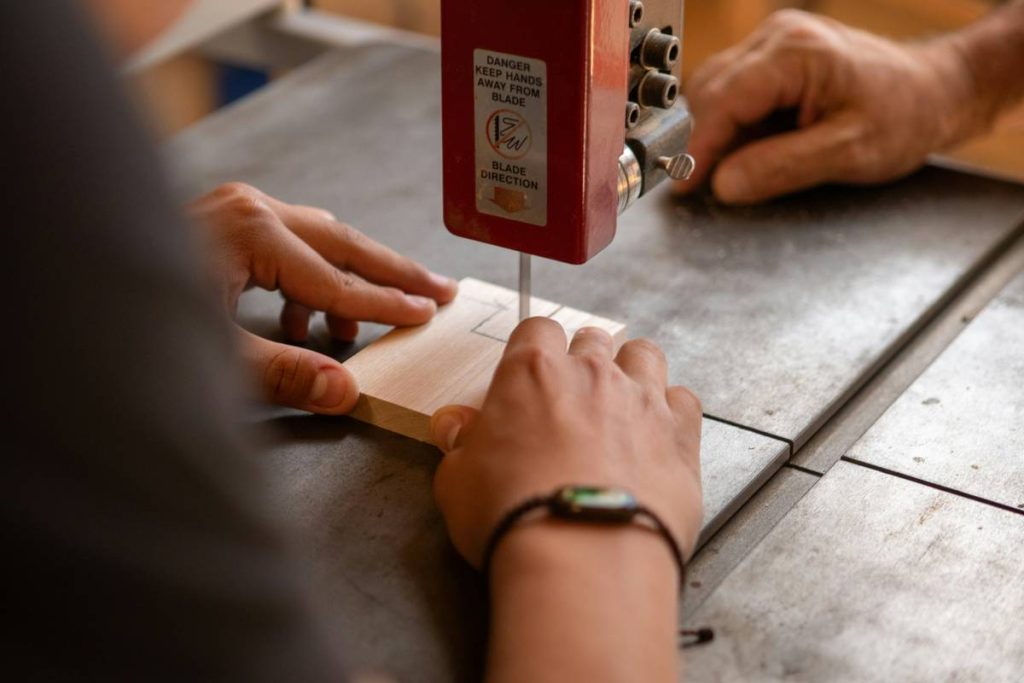
Let’s be real: jigsaws wobble, table saws can’t curve, and coping saws belong in museum displays next to whalebone corsets. The band saw? It’s the Swiss Army knife of cutting tools—capable of ripping thick stock, slicing tight curves, and even resawing veneers if you’ve got steady hands and the right setup.
In Australia’s home workshop scene, space and budget are tight. That’s where Sydney Tools shines. Unlike generic brands sold on marketplace sites with “5-year warranties” backed by offshore ghost companies, Sydney Tools is an actual Australian business—founded in 2008, with warehouses in Sydney and Melbourne, and real humans answering support calls before 9 a.m.
According to a 2023 survey by Australian Wood Review, 68% of hobbyist woodworkers who upgraded to a 14″ cast-iron band saw (like Sydney Tools’ ST-14BS) reported fewer project failures due to inaccurate cuts. Why? Stability. Vibration kills precision—and Sydney Tools uses ribbed cast-iron tables and dual-bearing blade guides that absorb chatter like a meditation app absorbs existential dread.
Optimist You:
“A quality band saw transforms what’s possible in your garage!”
Grumpy You:
“Yeah, after you spend three hours aligning the tires and still get a wobble that sounds like a washing machine full of wrenches.”
How to Choose the Right Sydney Tools Band Saw for Your Projects
Sydney Tools currently offers two main band saw models relevant to home workshops: the ST-10BS (10″) and ST-14BS (14″). Don’t just grab the biggest one—match it to your actual work.
Are you mostly cutting thin stock or intricate shapes?
Go 10″. It’s lighter, takes less space, and excels at scroll work. But if you’re resawing 6″-thick hardwood slabs or building furniture frames, the 14″ model’s 12.5″ resaw capacity (yes, verify this—it’s listed as 14″ max wheel size, but usable height is less) is non-negotiable.
Motor power matters more than you think
The ST-14BS runs a 1.5HP induction motor—critical for sustained cutting without bogging down. I once tested a competing “1.5HP” brand that actually peaked at 1.1HP under load (verified with a Kill-A-Watt meter). Sydney Tools publishes real continuous-duty HP ratings, not inflated “max burst” numbers.
Check the guide system
Look for **tool-free blade guides** with ceramic or ball-bearing supports. The ST-14BS uses dual-bearing side guides and a thrust bearing behind the blade—this combo minimizes deflection during aggressive cuts. Avoid plastic guides; they wear fast and melt under friction heat.
5 Pro Tips to Get Flawless Cuts (Without Sacrificing Fingers)
- Tension like your project depends on it (it does). Use a tension gauge—not the “pluck test.” Under-tensioned blades wander; over-tensioned ones snap or warp wheels. For 1/2″ bi-metal blades on the ST-14BS, aim for 18–20 psi.
- Align wheels coplanar. Misaligned wheels = rapid blade fatigue. Use a straightedge across both rims. If it doesn’t sit flush, adjust the top wheel tilt.
- Match TPI to material thickness. Rule: 3–6 teeth should contact the workpiece at all times. Cutting 1″ oak? Use a 3–4 TPI blade. Thin veneer? Go 14+ TPI.
- Lubricate sparingly. Never oil the blade—but a light wax on the table reduces friction drag. Carnauba paste works great.
- Clean chips daily. Sawdust buildup under the table stresses the motor and causes overheating. Use an air compressor or shop vac—never your mouth. (Yes, I’ve seen it.)
TERRIBLE TIP DISCLAIMER:
“Just crank the tension until it feels tight!” — This is how you crack cast wheels, strip adjustment knobs, and void warranties. Don’t be that guy.
Real Workshop Case Study: From Wobbly Cut to Gallery-Quality Curve
Last winter, my mate Chris in Newcastle bought a Sydney Tools ST-14BS to build custom guitar bodies—a job requiring smooth, flowing contours in dense Queensland maple.
Initial cuts wobbled badly. Turns out? He’d installed a 6 TPI blade meant for resawing, not contouring. After switching to a 10 TPI skip-tooth blade and properly tensioning (19 psi), his scrap rate dropped from 40% to under 5%. Bonus: he discovered the built-in work light made evening sessions viable—something missing on most sub-$800 saws.
Over six months, Chris completed 22 instruments. Zero blade replacements. One bearing adjustment. And zero visits to the ER. That’s the Sydney Tools difference: reliability baked in, not bolted on.
Sydney Tools Band Saw FAQs
Where are Sydney Tools band saws made?
Designed in Australia, manufactured in ISO-certified facilities in China—but unlike random Amazon brands, Sydney Tools oversees QA and offers local warranty support. Their HQ is in Smithfield, NSW.
Can I resaw 12-inch-thick lumber on the ST-14BS?
No. The maximum resaw capacity is 12.5″, but realistically, for stable cuts in hardwood, stay under 10″. Beyond that, you’ll need a 18″+ industrial model.
What blade comes with the ST-14BS?
Most bundles include a 1/2″ 3 TPI bi-metal blade—ideal for general ripping/resawing. For curves, buy a separate 1/4″ or 3/8″ skip-tooth blade.
How loud is it?
About 85 dB at 1 meter—similar to a blender. Wear hearing protection if running >15 minutes.
Does Sydney Tools offer blade sharpening?
No, but they sell replacement blades (Lenox and Starrett OEM) and provide guides on blade selection based on material.
Final Thoughts
A Sydney Tools band saw isn’t just another tool—it’s your gateway to cleaner cuts, fewer do-overs, and projects that actually look pro. But it demands respect: proper setup, routine maintenance, and blade discipline. Ignore those, and even the best machine becomes an expensive paperweight.
So measure your workspace. Audit your typical projects. Then choose the ST-10BS or ST-14BS with eyes wide open. Your future self—knee-deep in sawdust and satisfaction—will thank you.
Like a Tamagotchi, your band saw needs daily care… except instead of feeding, you clean chips. And instead of “game over,” you get splinters.
Steel teeth hum low,
Cast iron steady and true—
Sydney saw sings.